
Commack · Huntington · Long Island, NY
Structural Drying & Dehumidifying in Commack, NY
Calls answered 24/7
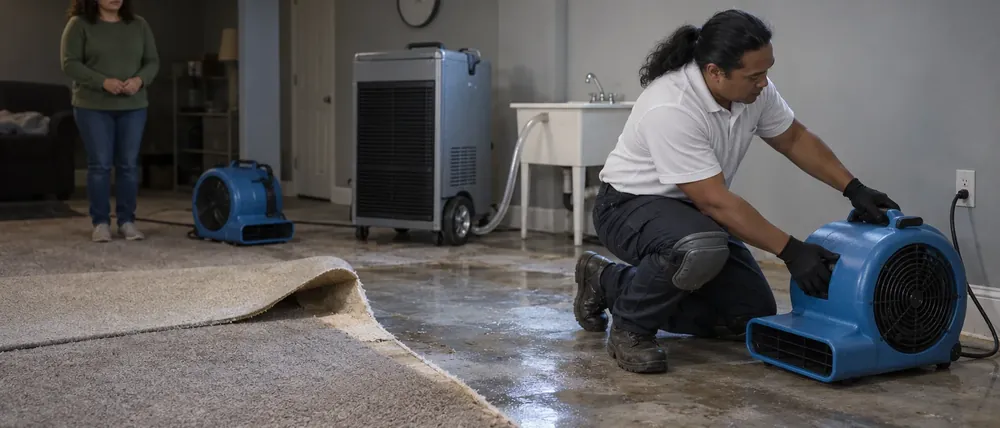
Call (631) 600-0014After water removal, our local restoration professionals dry damp building materials and dehumidify affected rooms in Commack, NY. Your technician uses moisture readings to plan the work and check progress before wet areas are closed or refinished.
- Calls answered 24/7
- Structural Drying & Dehumidifying
- Serving Commack, Huntington and nearby
After extraction: what structural drying includes
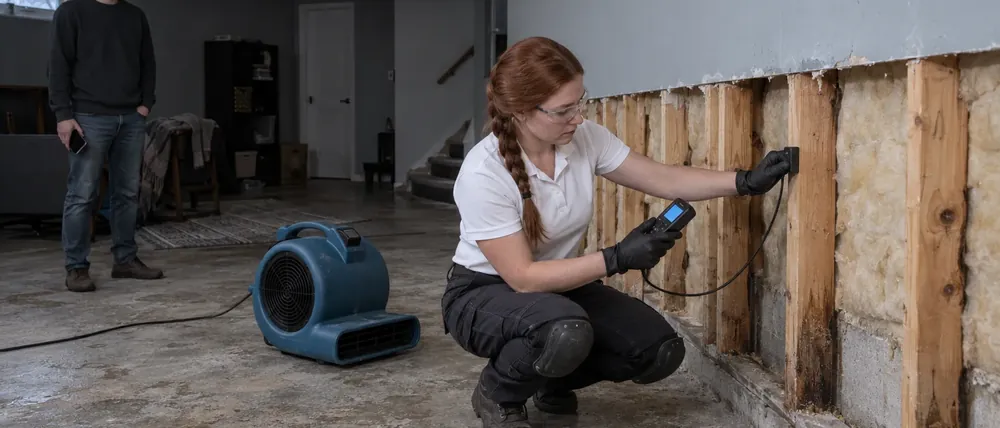
- At the initial moisture assessment: Your technician checks affected materials and records where dampness remains. The drying plan accounts for walls, floors, and accessible cavities rather than surface appearance alone.
- Before equipment starts: Unsafe electrical conditions and contamination need attention. Materials that cannot be retained are identified, and access needed for drying is explained.
- During equipment setup: Air movement and dehumidification are matched to the affected space. A water damage dehumidifier removes moisture from the air while suitable equipment supports drying of retained materials.
- During follow-up checks: Your technician takes additional moisture readings and adjusts the drying setup as needed. Progress is measured against material conditions.
- Before finishing work: Final readings and remaining concerns are recorded. The repair plan follows the drying results, including areas that need replacement rather than refinishing.
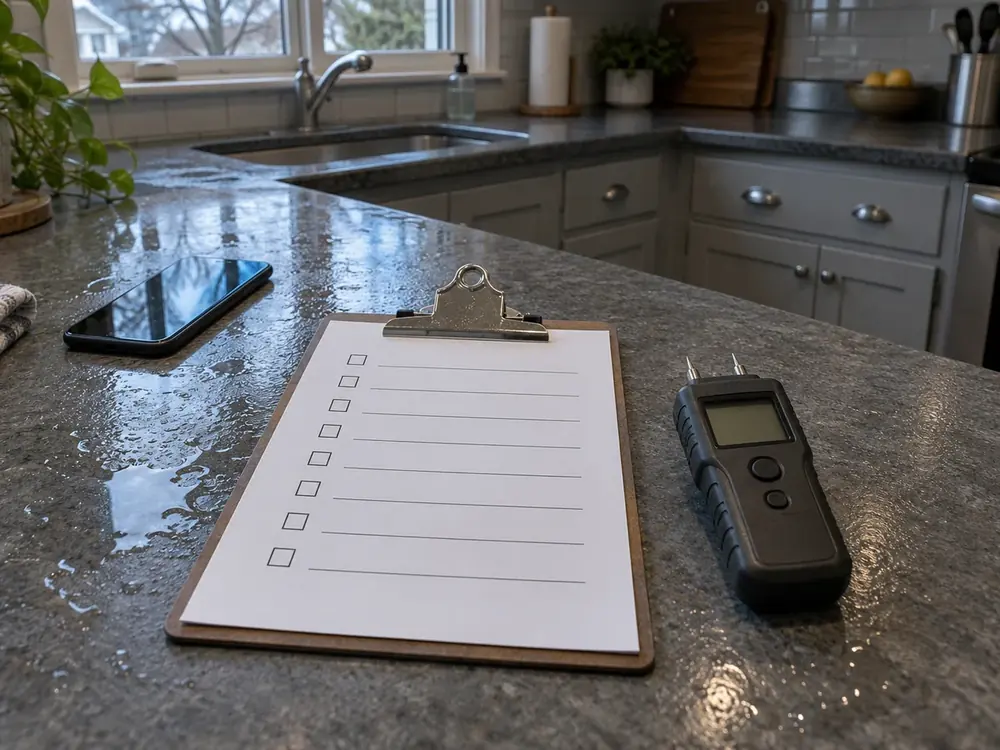
After water removal: signs moisture remains
- When a leak continues: New wet patches mean the source still needs attention alongside drying.
- After extraction: Carpet edges or floor seams remain damp even though visible puddles are gone.
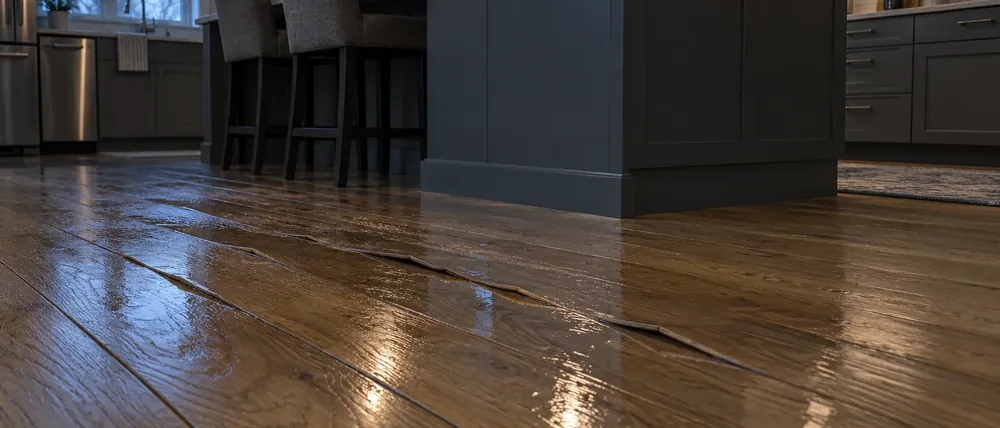
- During the following days: Wall bases feel soft, paint bubbles, or flooring begins to swell.
- While rooms appear dry: Damp odors or persistent humidity suggest moisture may remain in materials.
- Before refinishing: Fresh staining or visible growth signals unresolved damage; lingering moisture carries a general mold risk.
From the drying call to final readings
- First hour: Call about the wet rooms, even if visible water has already been removed. Describe the leak, affected finishes, and safely observed electrical concerns.
- Day one assessment: Your technician records moisture conditions and proposes equipment, access, and any material removal. Work begins after the scope and price conversation.
- Days two to four: Drying may continue while repeated readings show progress. EPA notes that drying after a flood commonly takes several days to weeks.
- Week one and beyond: Your technician checks retained materials before equipment removal or refinishing. Drying continues where readings show unresolved moisture.
At assessment: what affects the drying cost
At assessment, structural drying cost depends on how much material is wet, where moisture is trapped, equipment needs, access, and monitoring. Damp wall cavities or layered flooring may require more work than an exposed surface.
One of our local restoration partners will explain what the drying job involves and how it is priced before the work gets underway. The drying scope should distinguish moisture removal from replacement and finishing work. Water damage drywall repair cost also depends on how much damaged board must be replaced. The restoration cost guide explains the main factors.
At the drying call: a measured process
- When dampness appears: Calls answered 24/7 give you a way to discuss wet rooms, including after visible water is gone.
- At the initial conversation: Local restoration professionals handle drying requests for Commack and Huntington homes.
- Before equipment setup: The proposed scope and price explain drying, access, and any material removal.
- Across the drying stage: Photos and recorded moisture readings document progress, with a written scope describing the work.
First minutes: keep wet rooms safe
In the first minutes, avoid using electrical tools or appliances near standing water. Call from a dry location. CDC's electrical guidance says wet equipment needs inspection before power is restored, and nobody should enter water to reach a breaker.
During the first hour, keep people away from damaged walls, leaning supports, or visibly unstable areas. EPA's Coming Home guidance recommends professional assessment before entering a structurally damaged building.
Before disturbing finishes, leave damaged flooring and wall materials in place for assessment. EPA's Doing it Yourself guidance identifies possible lead and asbestos hazards in building materials. Don't cut, sand, or strip wet finishes to speed drying.
Related water damage services
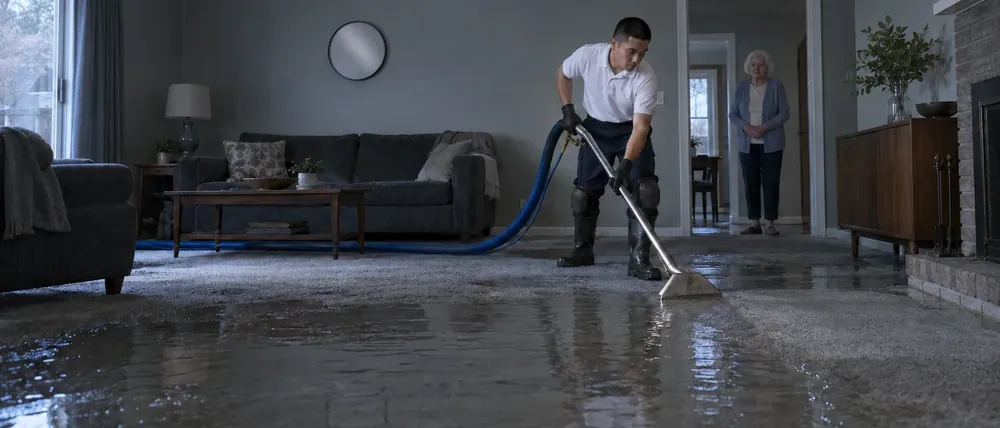
Areas we serve around Huntington and Commack
After a leak or flood, drying requests cover Commack and Huntington, plus Greenwich, Stamford, Norwalk and Bridgeport in Connecticut, along with nearby East Northport and Greenlawn homes with damp walls or floors.
Structural Drying & Dehumidifying FAQs
How long does structural drying take?
After a flood, drying commonly takes several days to weeks, according to EPA's flood cleanup guidance. The time depends on materials, moisture depth, access, and conditions inside the building. Your technician uses repeat readings to track progress. A dry-looking surface or the end of the first week does not establish that hidden spaces are ready for finishing.
Will a dehumidifier dry wet walls by itself?
During drying, a dehumidifier helps remove airborne moisture, but wet walls may also need air movement, access, or material removal. Your technician assesses the wall assembly and checks moisture in the affected materials. Equipment selection follows those conditions. Painting or closing a damp cavity too early can leave moisture trapped behind the finish.
Can drywall be dried instead of replaced?
During assessment, drywall is considered for drying only when its condition and contamination allow it to be retained. Absorbent material that cannot be cleaned and dried needs removal. After water damage, repair drywall once the retained structure is dry enough for finishing. Your technician records which sections need replacement and which remain in the drying plan.
Where can I get water damage drywall repair near me?
After a leak in Commack, call to discuss drying and the damaged wall sections that may need repair. Structural drying addresses retained building materials; replacement board and finishing belong in the repair scope. You can describe staining or soft wall edges during the call without opening the wall. Read about wall and drywall water damage.
How do I know the building is dry enough for repairs?
Before repairs, moisture readings provide a better check than touch or appearance alone. EPA advises using a moisture meter and drying flooded cavities completely before sealing them. Your technician checks the affected materials and records remaining concerns. The final review explains where refinishing can proceed and where drying or replacement work remains.
When your Commack home stays damp after a leak, call now and describe the rooms that need drying.
Call (631) 600-0014