
In the first hour, homeowners insurance may cover sudden accidental water damage, while gradual leaks and flood losses often fall outside standard coverage. Allstate's January 2026 coverage explanation makes that distinction. Your own policy and the facts of the loss determine the answer for your home. The restoration record documents the damage; your insurer decides coverage.
First hour: call for help and report the loss
In the first hour, call for restoration help when you discover water, and notify your insurer as soon as possible. Call now and describe the affected rooms, and one of our local water damage restoration professionals will take it from there. Report electrical hazards, a sagging ceiling or sewage during the call.
At discovery, turn off the water supply only when the valve is safely accessible. Don't enter standing water near electrical equipment or stand beneath a bulging ceiling to take a picture. Safe observations are enough to start the conversation. You don't need to finish photographing every room before calling.
When speaking with your insurer, explain what you found and when you found it. Distinguish a known cause from a suspected one. If the leak's starting time is unknown, say so. Keep the claim reference and the insurer's instructions with your damage records.
First day: distinguish a sudden loss from a gradual leak
During the first assessment, the cause and damage history help explain whether the loss was sudden or developed over time. A supply hose that breaks abruptly differs from a fixture that has leaked repeatedly without repair. Standard coverage commonly treats sudden accidental damage more favorably than unresolved maintenance damage.
As findings become available, record the source repair separately from the resulting water damage. Coverage for damaged walls or belongings does not automatically mean coverage for the broken appliance or pipe itself. Ask the insurer to explain the applicable policy wording. A restoration estimate cannot settle that question.
First day: organize water damage home insurance records
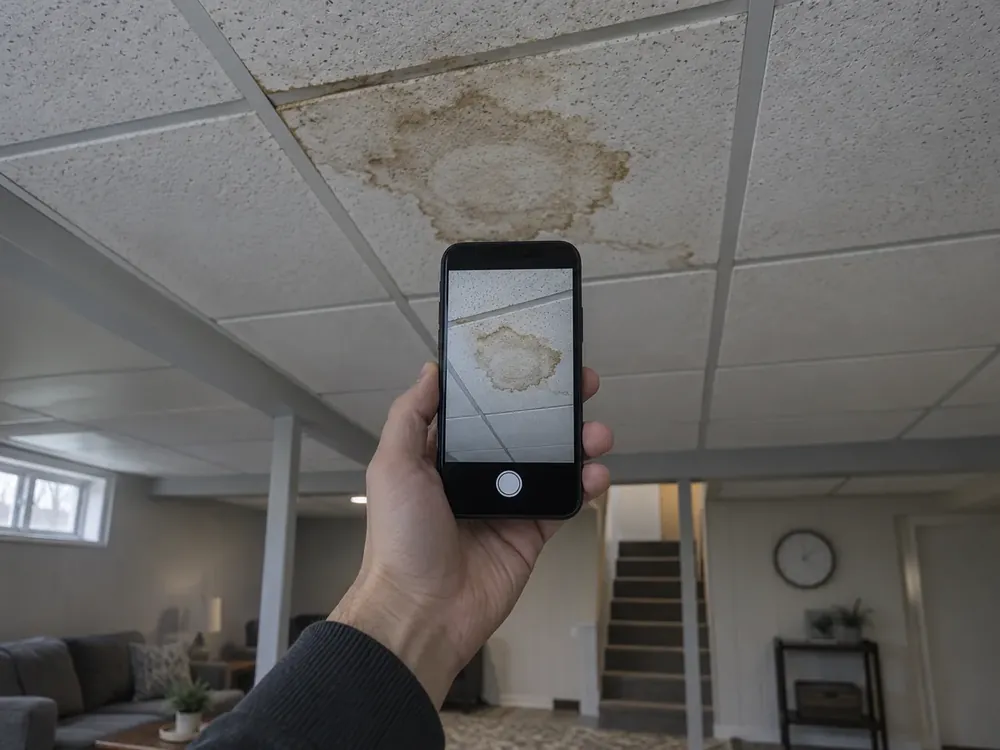
During the first day, photographs and a simple inventory create a record of conditions before cleanup changes the room. FEMA's National Flood Insurance Program recommends wide views and close-ups, including water levels, structural damage and identifying details on appliances.
- At discovery, photograph each affected room from a safe position.
- Before materials move, capture stains, wet flooring and damaged belongings.
- During inventory, record item descriptions and accessible serial numbers.
- As work proceeds, retain estimates, receipts and dated progress photos.
During assessment, one of our local service partners can supply photos, moisture readings and a written scope as documentation for insurance. Keep a water damage restoration insurance file that separates the initial condition, protective work and later repair proposals. Label records by room so a ceiling photograph can be matched to its inspection notes.
For a ceiling water damage insurance claim, include safe photographs of the ceiling and damage beneath it. Add the source findings when available. Don't cut into a ceiling yourself to create evidence, and don't describe an unconfirmed cause as established.
During cleanup: preserve evidence without delaying protection
During cleanup, necessary work to protect health, safety and the property can proceed while the loss is documented. New York's Department of Financial Services advises saving emergency repair receipts and documenting damage before cleanup. Contact your insurer promptly about inspection and permanent repairs.
Before discarding belongings, ask the insurer what evidence it needs and how to handle damaged items safely. Photographs and identifying details are useful when an item presents a health hazard. Keep records of what was removed and why. Damp materials also carry a general risk of mold; that risk belongs in the damage record without assumptions about coverage.
First week: separate flood coverage from the restoration record
Through the first week, identify whether outside flooding, an internal leak or a backup caused the loss. New York DFS states that standard homeowners insurance excludes flood damage and that separate NFIP coverage is available. Backup coverage can depend on an added endorsement, and flood-caused backups may be excluded.
During repair planning, follow up with your insurer about the inspection and proposed permanent work. A written scope explains the work requested. It does not establish what the policy pays. For budgeting, read the restoration cost guide. Keep any new findings with the existing records so the cause, damage and repair sequence remain clear.