
In the first hour, put people ahead of belongings and call now from a dry, safe place. Describe the rooms affected and whether water is still entering. You can share observations during the call without walking into a flooded basement or opening a wet wall.
Minutes 0–10: safety and electricity
In the opening minutes, keep everyone away from standing water near outlets, appliances or electrical equipment. The CDC advises switching off the main power only from a dry location. If reaching the switch means entering water, leave the task to an electrician. Don't operate electrical tools while standing in water.
If you smell gas, leave the building and contact emergency services from outside. Stay out of rooms with a sagging ceiling or other signs of instability. A bucket under a drip doesn't make an unsafe room safe.
First hour: stop a reachable water source
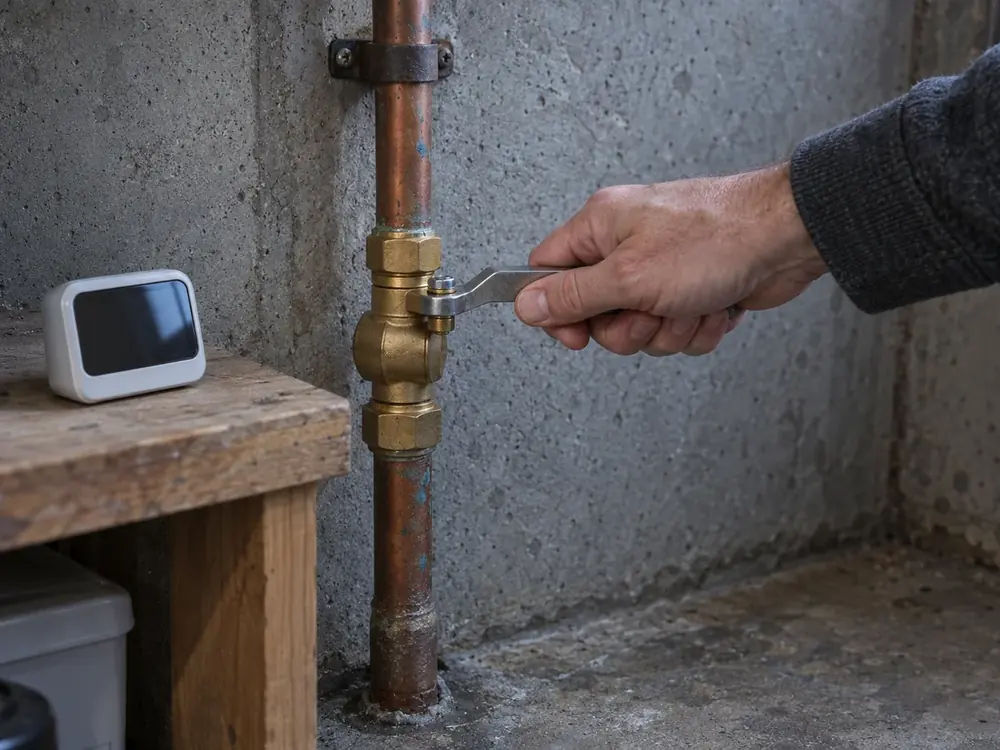
In the first hour, shut off the leaking supply only if you can reach the valve without exposure to electrical or structural hazards. A fixture valve may stop an appliance or sink leak. The main water valve may be needed when the break is elsewhere or the source is unclear.
For burst pipe water damage, a plumber addresses the broken line while restoration work addresses the wet building materials. Turning off the supply limits additional water; it doesn't establish that walls or flooring are dry. Never force a valve or enter a hazardous space to find one.
First hour: decide what to leave alone
In the first hour, leave suspected sewage and unknown floodwater to experienced cleanup professionals. If your house is flooded, what to do first depends on safe access and the water source. Water from outdoors can carry contaminants even when it looks clear.
- Keep children and pets away from affected rooms.
- Don't use a household shop vacuum to collect sewage.
- Don't aim fans at contaminated water or materials.
- A working, uncontaminated HVAC system may help with drying but may not dry the home alone.
EPA guidance advises gently cleaning visible mold before fans are used. If floodwater reached ducts or HVAC equipment, keep the system off until a professional says it is safe. Extraction, cleaning and controlled drying need a plan suited to the water involved.
First hour: what to do about ceiling water damage
In the first hour, keep clear of bulging, sagging or actively leaking ceiling material. Don't puncture a swollen section or climb onto furniture to inspect it. Tell your technician whether the mark sits below a bathroom, an appliance or the roof, if you already know. Photos taken from a safe doorway can record the change without putting you underneath it.
First day: document damage and review the scope
During the first day, save safely taken photos, receipts and a written account of when you discovered the water. Your technician can document affected materials and moisture readings for insurance. Contact your insurer directly for policy instructions.
Before work starts, review extraction, drying and any proposed material removal. Burst water pipe repair cost depends on the plumbing work and access required; it is separate from restoring wet rooms. Before restoration gets underway, you'll review the planned work and its cost in a discussion with one of our local restoration partners.
First week: follow the drying record
Across the first week, use moisture readings to track progress before closing walls or replacing finishes. EPA advises drying wet materials promptly, with 24–48 hours as a prevention guideline for reducing mold risk. That guideline isn't a guaranteed finish time. Extensive flood drying may continue beyond the first week.
Keep the written scope and subsequent changes together. Ask which materials remain wet and what the next check will resolve. The drying timeline explains why an apparently dry surface can still need attention.